

Calculating Optimal Land Choices for a Greener Britain
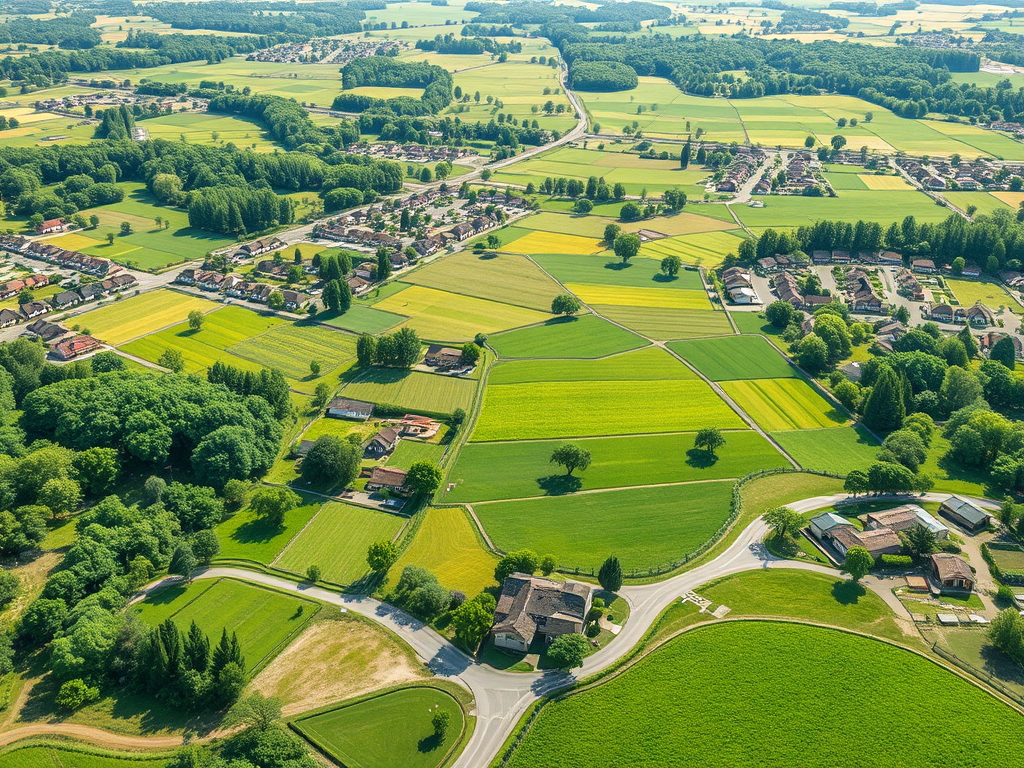
The world’s land is a finite resource that faces competition over its use, with various stakeholders attempting to utilise it in different ways: for agriculture, for industry, for habitation, for nature. Allowing nature to flourish and ensure that the global ecosystem, of which we are all a part, is rich in biodiversity and can regulate our climate is critical. At the same time, we must also ensure that we can provide the resources necessary for sustainable development and societies the world over. But how much this be achieved and what would such a landscape look like?
In collaboration with the RSPB and researchers in the Conservation Research Institute, Dr Robert Edwin Rouse is working on developing machine learning approaches to assess how different land use scenarios impact the balance between nature and human demand for food and food security.
“Every acre counts – smart land choices today shape our climate, food and biodiversity for tomorrow,” Professor Emily Shuckburgh OBE, Director of Cambridge Zero and the Centre for Landscape Regeneration.
Restoring peatlands, wetlands, and forests is essential for improving biodiversity and creating nature based carbon storage solutions. However, whilst regenerating landscapes can have environmental benefits these could come at the cost of agricultural output.
“The UK is extremely nature depleted. Reversing this necessitates ecosystem restoration but our land resources are finite, with intense competition among users with differing objectives. We must balance the need to produce sufficient food while also minimising our climate impact,” said Dr. Rouse.
The researchers plan to use neural models within genetic algorithms to identify the optimal land use scenarios that best maximise biodiversity, minimise land-based carbon emissions, and maximise food production simultaneously. They will create a dedicated platform using these models, one where decision-makers can visualise and and explore potential scenarios to understand what solutions are available for them, aiding the development of evidence-based policies.
“The model won’t just predict – we hope it will also inform. We are aiming to give decision makers smarter and greener land choices,” Professor David Coomes, Codirector of the Centre for Landscape Regeneration.
AI for Climate and Nature is an interdisciplinary collaboration between Cambridge Zero, Cambridge Conservation Research Institute, Conservation Evidence, Institute of Computing for Climate Science, Centre for Landscape Regeneration, Cambridge Centre for Carbon Credits (4C), Cambridge Conservation Initiative, Cambridge Centre for Earth Observation and the Dawn supercomputer.
 AI for Climate & Nature